
5 Cars You Should Buy After Delhi EV Policy Changes 2026
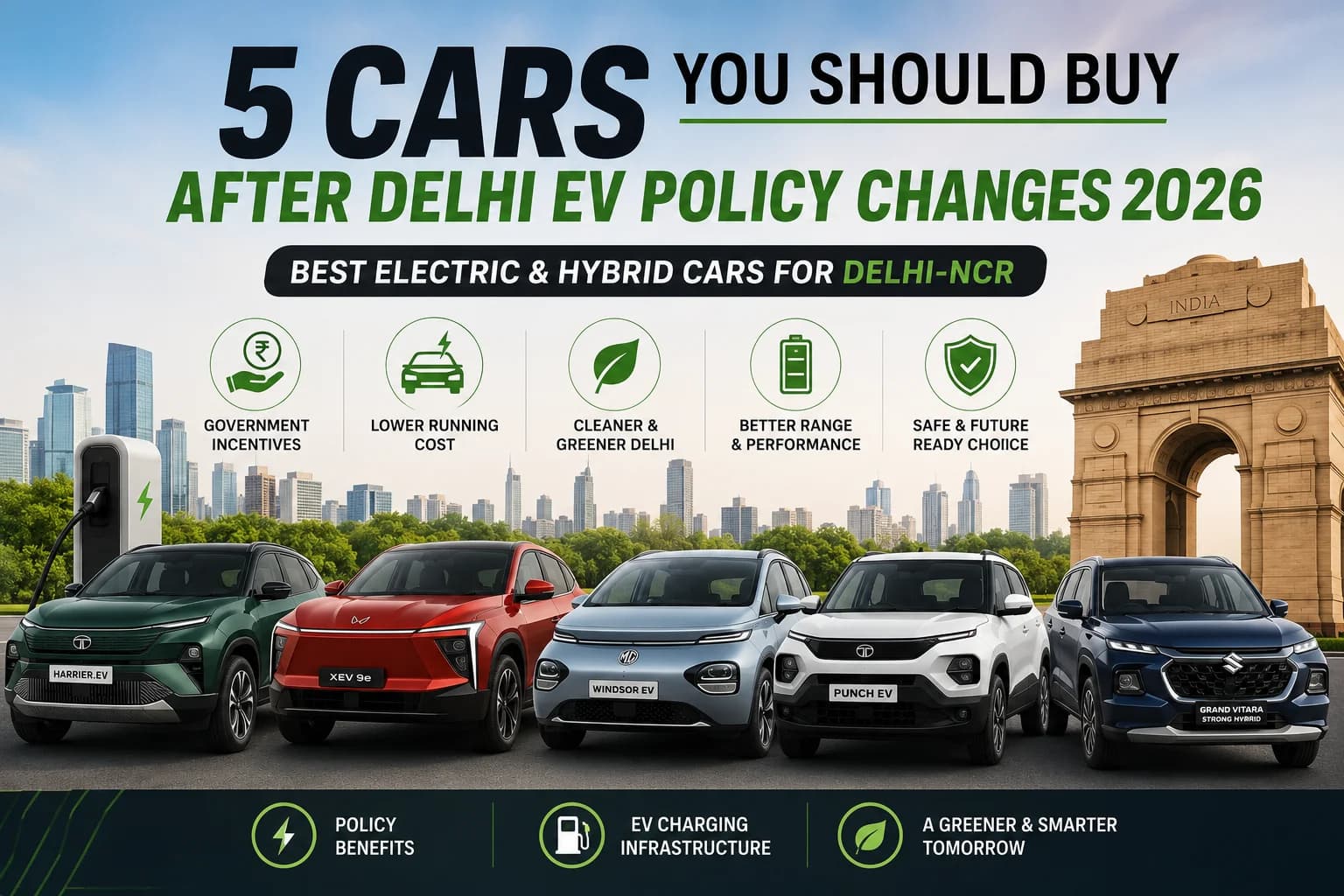
After Delhi's EV policy has recently changed, we see there's immense support being extended for EV adoption. This is definite that the policy is pushing towards cleaner mobility.
The change in policy is more than news and will most likely influence the buying decision of many Delhi-NCR customers.
This guide shall entail a well-curated list of five cars that makes most sense, especially after the policy change. From affordability, range, practicality, to long-term ownership cost, everything is covered here.
Delhi EV Policy 2026: What Changed?
Before we proceed, you must take a concise view of what the Delhi Policy for EV is about. Follow along to know:
Road tax & registration benefits but for people who quality
Incentives for eligible electric cars
Support for hybrid vehicles as per the policy's provisions, when applicable
Focus on cleaner urban mobility as part of the government's long-term vision
Why Buyers Should Pay Attention?
The policy changes are most likely to be seen lowering the ownership costs, while influencing the resale value. We have a detailed guide on these policy changes and how it is impacting various segments of the society. Read that to understand in detail about the policy.
How We Choose These Cars?All the cars we have chosen and listed for you are based on the following criteria. Take a look to get an idea about where the focus actually is and what you will be getting if you choose to buy any of these cars. The parameters include: Eligibility under the policy
|
5 Cars You Should Buy After Delhi EV Policy Changes 2026
Here's the list of 5 premium cars you can consider buying keeping in mind the clauses of the new EV policy in Delhi.
1. Tata Harrier EV
Best Premium Electric SUV for Families
Factors | Specifications |
Price | ₹21.49 lakh - ₹30.23 lakh |
Battery Pack | 65 kWh 75 kWh |
Claimed Range | Up to 627 km (MIDC) |
Expected Real-World Range | 480-550 km |
Powertrain | Rear-Wheel Drive (RWD) Dual-Motor All-Wheel Drive (QWD) |
Power Output | Up to 396 PS 504 Nm torque |
Charging | 7.2 kW AC Home Charger DC Fast Charging (up to 120 kW) 20-80% in around 25 minutes (DC charger) |
Boot Space | 502 litres Additional 67-litre frunk |
Key Features
14.5-inch Samsung Neo QLED touchscreen
10.25-inch digital driver's display
JBL 10-speaker premium sound system with Dolby Atmos
Panoramic sunroof
Ventilated front seats
Powered driver's seat with memory
Wireless Android Auto & Apple CarPlay
Dual-zone climate control
Vehicle-to-Load (V2L)
Vehicle-to-Vehicle (V2V)
Digital IRVM
OTA software updates
Multiple terrain modes
Safety
7 airbags
Level 2 ADAS
Electronic Stability Control
360-degree camera
Blind Spot Monitor
Autonomous Emergency Braking
Lane Keep Assist
Adaptive Cruise Control
Pros | Cons |
|
|
Why Does It Fits the Delhi EV Policy?
The Harrier EV benefits from the policy's focus on electric mobility while offering enough range for daily commutes and intercity travel. Buyers also enjoy significantly lower running costs compared to similarly sized ICE SUVs.
Best For
Families, professionals, and buyers upgrading from premium diesel SUVs.
2. Mahindra XEV 9e
Best Long-Range Luxury Electric SUV
Factors | Specifications |
Price | ₹21.90 lakh – ₹31.25 lakh |
Battery Pack | 59 kWh 79 kWh |
Claimed Range | Up to 656 km (MIDC) |
Expected Real-World Range | 500–560 km |
Powertrain | Rear-Wheel Drive |
Power Output | Up to 286 PS 380 Nm torque |
Charging | 175 kW DC Fast Charging 20–80% in approximately 20 minutes 11.2 kW AC Home Charger |
Boot Space | 663 litres Additional front storage |
Key Features
Triple 12.3-inch digital displays
Augmented Reality Head-Up Display
Harman Kardon 16-speaker sound system
Dolby Atmos audio
Panoramic fixed glass roof
Ventilated and powered seats
Wireless charging
Connected car technology
Digital key
OTA updates
Multi-zone ambient lighting
Vehicle-to-Load
Vehicle-to-Vehicle charging
Safety
7 airbags
Level 2+ ADAS
Driver monitoring system
Adaptive Cruise Control
Automatic Emergency Braking
Blind Spot Detection
Lane Centring Assist
360-degree camera
Pros | Cons |
|
|
Why It Fits the Delhi EV Policy
For buyers planning to keep their vehicle for several years, the XEV 9e combines low running costs with premium comfort and long-range capability, making it an attractive choice under Delhi's EV-focused policy.
Best For
Luxury SUV buyers and frequent highway travellers.
3. MG Windsor EV
Best Value Family Electric Crossover
Factors | Specifications |
Price | ₹14 lakh – ₹18 lakh (depending on battery/ownership plan) |
Battery Pack | Around 52.9 kWh |
Claimed Range | Up to 449 km (MIDC) |
Expected Real-World Range | 340–390 km |
Power Output | 136 PS 200 Nm torque |
Charging | AC Home Charging DC Fast Charging (45 kW) 20–80% in approximately 55 minutes |
Boot Space | 604 litres |
Key Features
15.6-inch touchscreen
Digital instrument display
Panoramic glass roof
Wireless Android Auto & Apple CarPlay
Connected car features
Rear AC vents
Ventilated seats
Powered tailgate
256-colour ambient lighting
Vehicle-to-Load
Safety
6 airbags
Electronic Stability Control
TPMS
360-degree camera
ADAS functions (top variants)
Pros | Cons |
Spacious cabin Huge boot Comfortable ride Competitive pricing Practical family car | DC charging speed isn't class-leading Performance is tuned more for comfort than excitement |
Why It Fits the Delhi EV Policy?
The Windsor EV offers an accessible entry into electric mobility with strong practicality, making it ideal for families looking to maximise policy benefits without stretching into the premium segment.
Best For
Growing families and daily commuters.
4. Tata Punch EV
Best Compact Electric SUV
Factors | Specifications |
Price | ₹9.99 lakh – ₹14.44 lakh |
Battery Pack | 25 kWh 35 kWh |
Claimed Range | Up to 421 km (MIDC) |
Expected Real-World Range | 280–340 km |
Powertrain | |
Power Output | Up to 122 PS 190 Nm torque |
Charging | 7.2 kW AC Charger DC Fast Charging 10-80% in approximately 56 minutes |
Boot Space | 366 litres |
Key Features
10.25-inch touchscreen
10.25-inch digital instrument cluster
Wireless Android Auto & Apple CarPlay
360-degree camera
Air purifier
Ventilated seats
Sunroof
Cruise control
Arcade.ev connected suite
Front storage (frunk)
Regenerative braking with multiple levels
Safety
6 airbags
Electronic Stability Control
ISOFIX child seat mounts
TPMS
360-degree camera
Pros | Cons |
Affordable SUV stance Easy to drive Premium interiors Great city range | Rear seat width is limited for three adults Highway performance isn't as effortless as larger EVs |
Why It Fits the Delhi EV Policy?
Its relatively affordable price, low running costs, and practical city-friendly dimensions make it one of the most sensible choices for Delhi buyers transitioning to an EV.
Best For
Young professionals, first-time EV buyers, and urban families.
5. Maruti Suzuki Grand Vitara Strong Hybrid
Best Strong Hybrid Alternative
Factors | Specifications |
Price | ₹18.99 lakh – ₹20.68 lakh (Strong Hybrid) |
Battery Pack | 65 kWh 75 kWh |
Engine | 1.5-litre petrol engine Self-charging strong hybrid system |
Mileage | Up to 27.97 km/l (ARAI) |
Fuel Tank | 45 litres |
Power Output | Combined output of approximately 116 PS |
Transmission | e-CVT Automatic |
Boot Space | 265 litres (hybrid variant) |
Key Features
9-inch touchscreen infotainment
Head-Up Display
360-degree camera
Panoramic sunroof
Wireless charging
Ventilated seats
Suzuki Connect connected car technology
Automatic climate control
Premium leatherette upholstery
Safety
6 airbags
Electronic Stability Control
Hill Hold Assist
ABS with EBD
ISOFIX child seat mounts
Pros | Cons |
Outstanding fuel efficiency No charging required Smooth city driving Proven reliability Strong resale value | Smaller boot due to battery placement Doesn't offer the silent EV-only experience of a full electric vehicle |
Why Does It Fit the Delhi EV Policy?
For buyers who lack access to home charging or frequently travel long distances, the Grand Vitara Strong Hybrid offers excellent fuel savings while aligning with the policy's encouragement of cleaner mobility through incentives for strong hybrids.
Best For
High-mileage users, apartment residents without charging access, and buyers seeking lower fuel costs without committing to a full EV.
Conclusion
With the new EV policy, the Delhi government seems intending to make electric mobility more attractive for buyers. This purposefully resolves two major issues - reduction in the ownership cost and encouraging buyers to opt for cleaner transportation.
When it comes to vehicles, the right cost is seemingly more about personal budget and driving habits. For buyers who opt for an option that aligns with the new policy will most likely enjoy long-term savings and futuristic technology.
Read more about EVs on carbikespecs.com - a hub for automobile enthusiasts.